
Inheritance, children versus carers, between disputes and appeals
The legal battles that determine legitimate and non-legitimate heirs
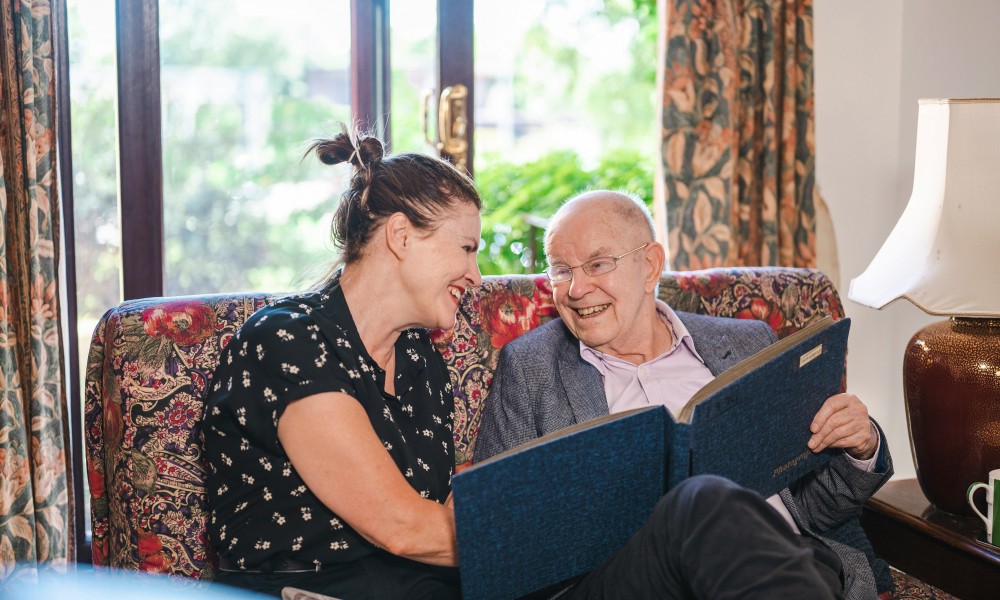
In recent years, Italian courts have seen a surge in sensitive yet humane litigation, with a significant increase in will challenges involving caregivers and domestic workers. These stories speak of loneliness, of bonds built through daily life, but also of family conflicts, suspicions of manipulation, and legal battles over the validity of wills.
The starting point is legally simple. In the succession system outlined by the Civil Code, none of these figures has an automatic right to the employer's inheritance. If a person dies without a will, the estate passes according to the rules of intestate succession to the closest relatives: spouse, children, ascendants, collateral relatives up to the sixth degree, and, failing that, to the State. A caregiver who has cared for an elderly person for years is not among those entitled to the inheritance.
Yet, the reality is much more complex.
- Testamentary freedom and its limits of legitimate inheritance
- How to prove the testator's will?
- Donations, joint accounts, bank delegations, and family jewels
- Can condominium doormen be involved in wills?
- Should the severance pay of carers be paid upon the death of the deceased?
- A legal issue, but also a social one
Testamentary freedom and its limits of legitimate inheritance
Our legal system recognizes a fundamental principle of testamentary freedom. Anyone can dispose of their assets after death by naming heirs or assigning individual assets through a legacy. This means that an elderly person can decide to leave part, or even all, of their assets to the caregiver who cared for them in their final years, to their chauffeur, to a close assistant, to the concierge, or to a close relative, leaving aside the others.
But that freedom is not absolute. The Italian system protects the so-called legitimate heirs—spouse, children, and, in the absence of children, ascendants—who are entitled to a minimum share of the estate, the so-called legitimate portion. Distant relatives on the other side of the world are also not excluded.
If the will exceeds the available share and affects the reserved share, family members can file a reduction action to restore the affected reserved share. This action is subject to a ten-year statute of limitations, allowing forced heirs to obtain the reconstruction of the estate and the consequent reinstatement of their share.
This is where conflict often erupts. Children feel left out, siblings complain about their parent's isolation, grandchildren complain about undue influence.
It has also often happened that one found oneself with multiple wills published, starting an endless ordeal of will challenges.
How to prove the testator's will?
In judgments concerning bequests in favor of third parties, the central issue is the genuineness of the testator's wishes.
It is absolutely legitimate to leave your assets to whoever you want, as long as you are capable of understanding and willing and respect the Law.
The disputes are mainly on two fronts: natural incapacity and capture.
In the first case, it is argued that the deceased, at the time the will was drawn up, was not fully capable of understanding and willing, perhaps due to neurodegenerative diseases. The burden of proof falls on the person challenging the will and must concern the very moment the will was drawn up; demonstrating a general frailty or a subsequent impairment of cognitive faculties is not sufficient.
In the second, psychological pressure is hypothesized, what in the legal field is often referred to as "capture" or undue influence, that is, an exploitation of the testator's state of fragility and an emotional manipulation capable of guiding the testator's will.
Case law, however, consistently clarifies one point. A mere caregiving relationship is not equivalent to proof of abuse. The fact that a third party lives with the elderly person, accompanies them to medical appointments, manages the household, and becomes their sole point of contact does not automatically mean that deception has occurred. Concrete and rigorous evidence is required, truly demonstrating undue influence over the testator's will.
And it is not easy to prove an alleged theft of an inheritance.
Donations, joint accounts, bank delegations, and family jewels
Tensions don't only emerge after death. Conflicts often arise when, during life, the elderly person decides to make donations to the caregiver or to co-register a bank account with her. Upon their passing, their heirs may argue that these were sham actions or otherwise detrimental to their legitimate share, arguing that the co-registered ownership was merely a functional delegation and not an actual attribution of assets.
The distinction between a genuine act of generosity and a merely instrumental transaction is one of the most challenging areas of contemporary inheritance law. The decision often revolves around whether the transaction is classified as a direct donation or an indirect gift, as well as proving the actual intent to permanently assign those sums to the beneficiary. This is also because, on a human level, it is not uncommon for the relationship between the beneficiary and the caregiver to develop into a deep emotional bond, sometimes more intense than that of distant or absent family members.
There have been valuable paintings, gold, necklaces, expensive watches, and cash missing from safes. However, only traceable items are subject to dispute. Anything that cannot be "proved" or "determined" cannot be claimed.
For this reason, it's advisable to seek immediate advice (by filling out the form) before taking action. Impulsive action could alarm the other party, potentially compromising their position.
Can condominium doormen be involved in wills?
The position of the condominium caretaker is different. Their employment relationship, as a rule, is with the condominium and not with the individual owner. This makes a bequest in their favor even rarer, but not impossible. Even in this case, however, the same rule applies. There is no automatic right, but they have the full possibility of being a beneficiary of a will, respecting the shares reserved for forced heirs.
Should the severance pay of carers be paid upon the death of the deceased?
Beyond inheritance, caregivers and domestic workers still have patrimonial rights that cannot be ignored. Upon the death of their employer, credits accrue that weigh on the estate: severance pay, unpaid wages, thirteenth-month salary payments, and unused vacation. These are rights arising from the employment contract. These credits constitute debts of the estate and are owed to the heirs who accept the inheritance, who are required to satisfy them within the limits of the rules on inheritance liability.
A legal issue, but also a social one
The phenomenon of wills in favor of caregivers reflects a demographic and cultural shift. The aging population, the fragmentation of families, and the geographic distance between parents and children mean that the home caregiver often becomes the most present person in the elderly person's life.
The law must strike a balance between protecting individual freedom and protecting family members from potential abuse.
There is no one-size-fits-all solution, because behind every contested will lies an attempt to reconstruct a will that was often formed in solitude and fragility. To navigate challenges, donations, and joint accounts, it is essential to consult professionals with expertise in inheritance law , capable of offering targeted advice and technical support. Among these, those at the Agenzia delle Successioni stand out. Their services, which can be activated even after a consultation, can provide guidance in defending against inheritance theft or will challenges.
If you're experiencing a situation like the one described above, find yourself the beneficiary of a will, or discover that someone is allegedly stealing your assets unlawfully, it's a good idea to schedule a consultation with one of our professionals immediately by filling out the form. Planning an asset protection or defense strategy requires time and careful consideration of current regulations. Handwriting appraisals, investigative agencies, and asset searches can be helpful in reconstructing the deceased's final years, allowing for appropriate action to be taken.
Customer Service
Customer support is available Monday to Friday, from 9:00 AM to 5:00 PM.
Fill out the Form
Consult the expert professional in the field
Fast response and personalized assistance!


